Youth Media | Philosophy

Create With Purpose
Creating digital content often comes easily to youth who are immersed in technology in their everyday lives. While a young person can practice a skill such as media making on his or her own, an effective media educator functions as a coach to reinforce good form, recommend ways to improve, and provide continual moral support. Your challenge as an educator is to provide the guidance and space for young people to create media with originality, vision, and purpose.
This challenge to youth, to make original works that speak to their own needs and issues, reflects a strategy and instructional technique meant to foster a highly intentional approach to media making—one that is designed to have impact and effect change, that is, to Create with Purpose.
When educators guide young people to Create with Purpose, youth produce media that is:
Relevant to the media makers and the audience
Intentional: Designed to have a specific impact on an intended audience
Personal: Expressing a clear point of view or specific perspective
Collaborative: Youth and educators working side by side
Original: Evident in style and content
Inquiry-based: Derived and led by youth questions
High quality: Illustrating the effective use of tools and techniques
Strategies for fostering these qualities are reinforced throughout the resources and will help you as an educator better facilitate media creation and learning along the way.
Creative Process – Facilitating Youth Media Making
While participating in media making, youth work both individually and in groups to develop an idea, “pitch” the idea to their peers, and refine it to best articulate their creative vision. They then learn the technology skills that enable them to produce their concept in an innovative and creative way. In this process, youth engage with an idea or issue that is personally meaningful to them—building their own resiliency and voice.
A carefully planned youth media-making experience has at least five steps in the process.

Pre-Production

Production

Post-Production

Revision

Exhibition
Getting young people to think more creatively and produce original, authentic media takes guidance on the part of the educator. We encourage educators to begin by facilitating a number of idea development or brainstorming activities with young people, to align the experience to other learning goals if necessary, and to support the creation of purposeful self-expression and youth voice.
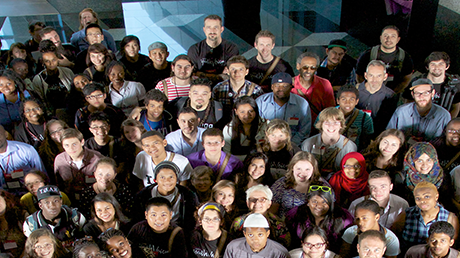
Celebrating Ten Years of Adobe Youth Voices
The vision of AYV was to empower young people to harness creativity and digital skills as a force for positive change in their communities.
Read More >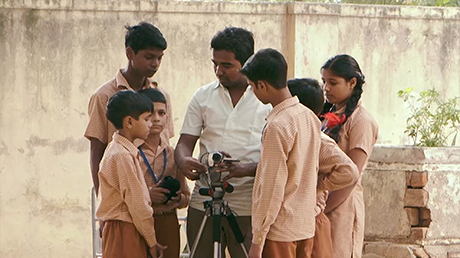
Adobe's Investment in Creativity
Adobe believes in the power of creativity to inspire positive change. Learn how AYV played a central role in Adobe’s efforts to catalyze a conversation around creativity in education.
Learn More >